Nine stations, four firings, one pass
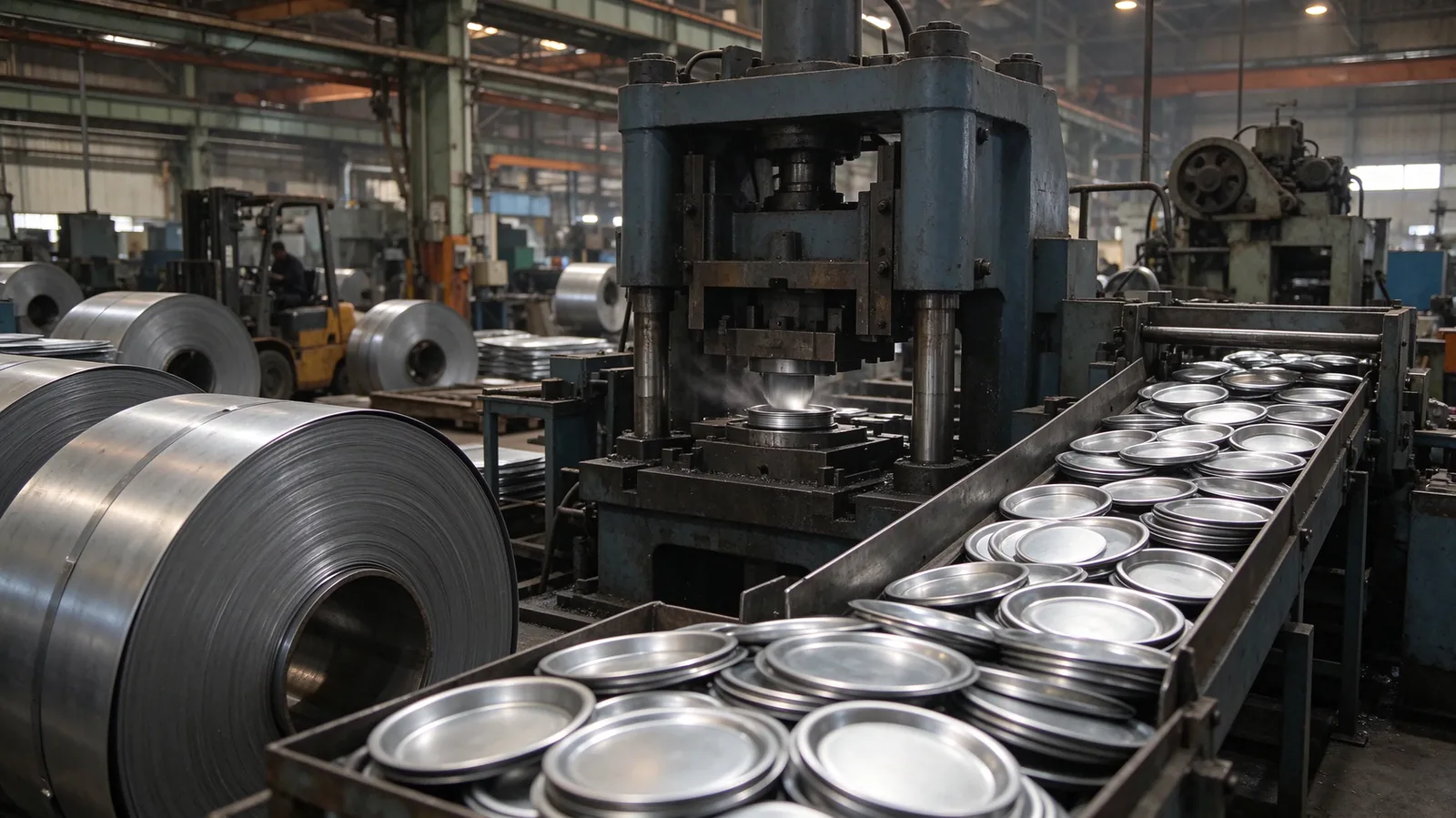
Sheet steel in at station one, a sealed export carton out at station nine.
The line has not moved in twenty years
Blanking, drawing, handle welding, ground coat, two cover coats, decal firing and packing all happen inside one workshop. There is no outside processing between stations. The tooling and the firing curves are already settled, so we are not learning on your order.
- 20
- Years on one production line
- 0.5–0.6 mm
- Cold-rolled steel body
- 0.9 mm
- Enamel build, double coat two fire
- 4
- Series on one glazing line
The nine stations
Sequenced as run in our workshop. Printed ware takes four kiln passes, solid colour three.
- 01
Blanking
Sheet to blank
- 02
Drawing
Body in one piece
- 03
Trim and curl
Edge cut and rolled
- 04
Handle weld
Handle attached before glazing
- 05
Ground coat
Base enamel, fired
- 06
Cover coat I
Colour, first pass
- 07
Cover coat II
Colour, second pass
- 08
Decal fire
Print fused into the glaze
- 09
Packing
Carton and label
Why the glaze is fired four times
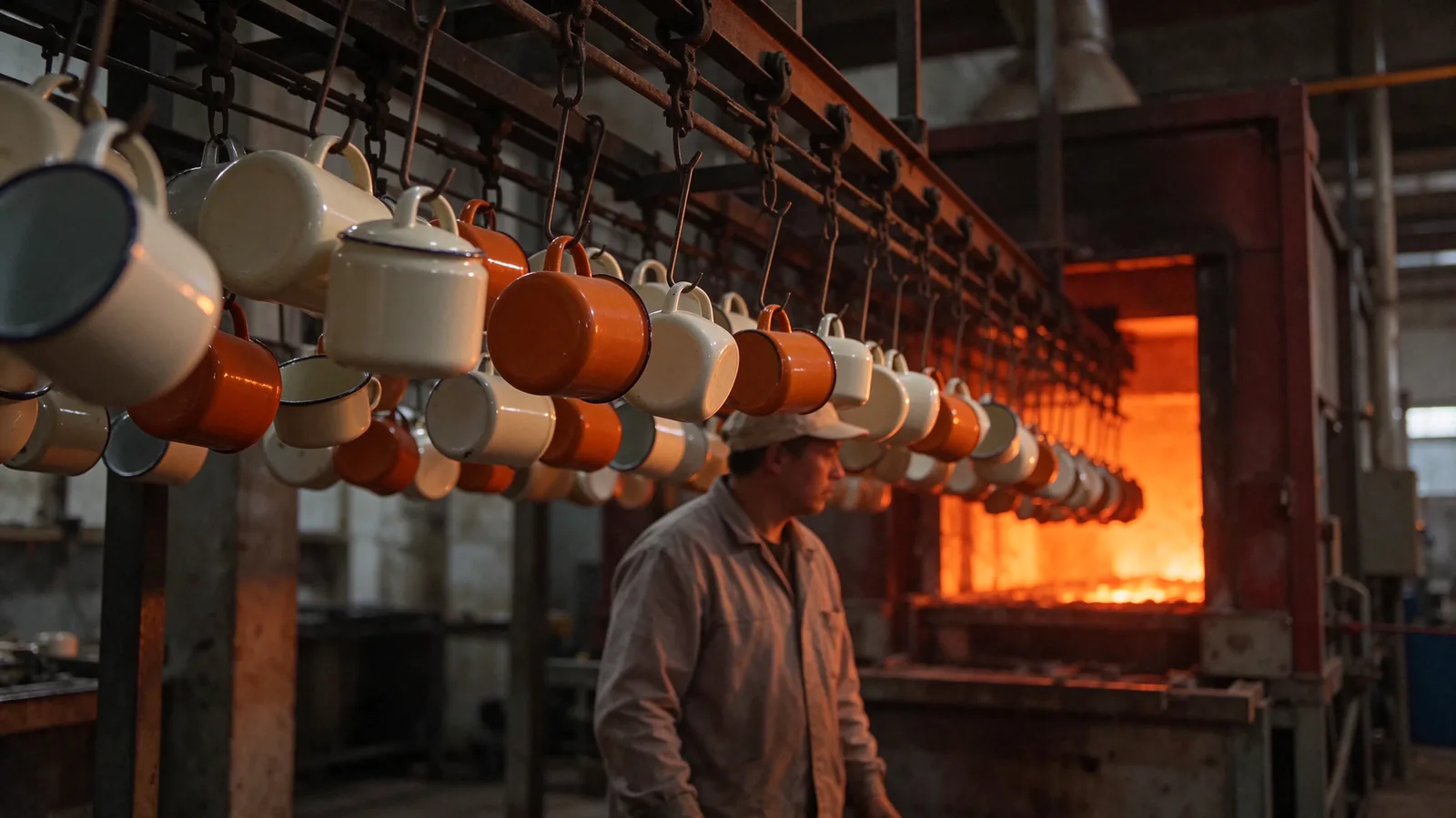
Enamel is glass melted onto steel, not a paint film. It goes on in thin layers, each with its own firing, so the surface takes a knife and a dishwasher without chipping. One heavy coat would craze instead.
Inspection sits between the passes
A body rejected after three firings has already cost three firings, so we check between the passes rather than at the end of the line.
0.5–0.6 mm steel, about 0.9 mm of enamel
Body steel is 0.5 mm on mugs and tableware, 0.6 mm on cookware. The wall is the structural layer. A thicker wall resists the flex that flattens rims, keeps handles square and keeps lids closing. On top, a ground coat and a cover coat give the harder surface and the heat tolerance.
Questions on capacity, tooling or packing
Ask the export desk. Answers come back with numbers from the workshop, not adjectives.